
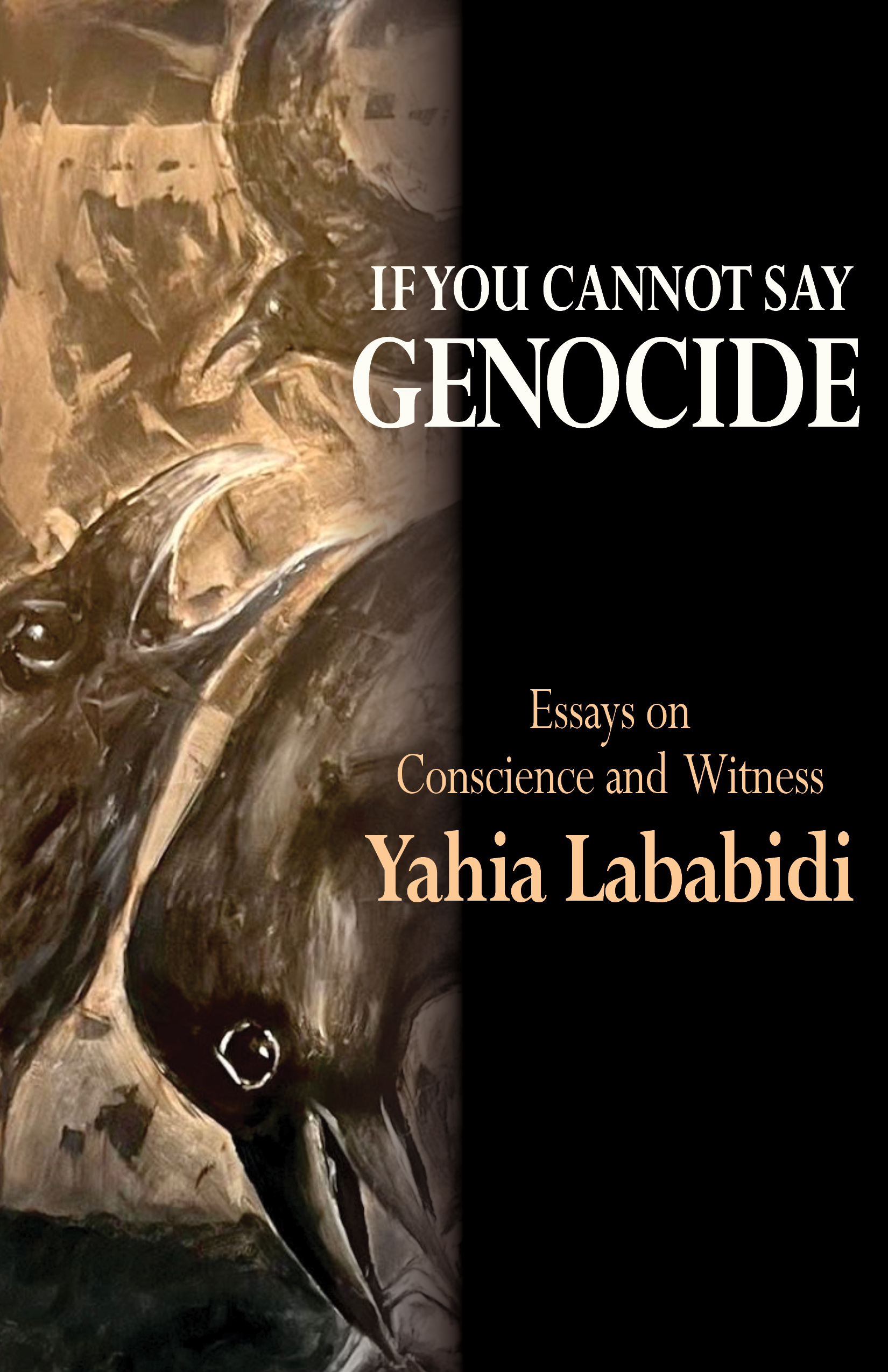
If You Cannot Say GENOCIDE
Essays on Conscience and Witness
by Yahia Lababidi
Yahia Lababidi wrote 47 essays between 2023 and 2026 in response to the ongoing devastation in Gaza. His acts of witness are shaped by grief, memory, and a refusal to turn away from human suffering. This is a book of conscience under pressure, written from an Arab American perspective shaped by exile and moral inquiry. It is the work of a poet who could no longer write poems and who feared for his soul if he remained silent. If You Cannot Say GENOCIDE asks what fidelity to truth demands when language itself is under siege. A book about the moral injury of witnessing the eradication of Palestine and what it costs the soul when the conscience will not look away.
Forthcoming
Published by New Village Press
Distributed by NYU Press
Available October 27, 2026
256 pages, 5.50 x 8.50 inches
Cover illustration by Malak Mattar
Available in jacketed hardcover
ISBN: 978-1-61332-304-5
Hardcover price: $30.00
Primary edition: jacketed hardcover
Also available in ebook
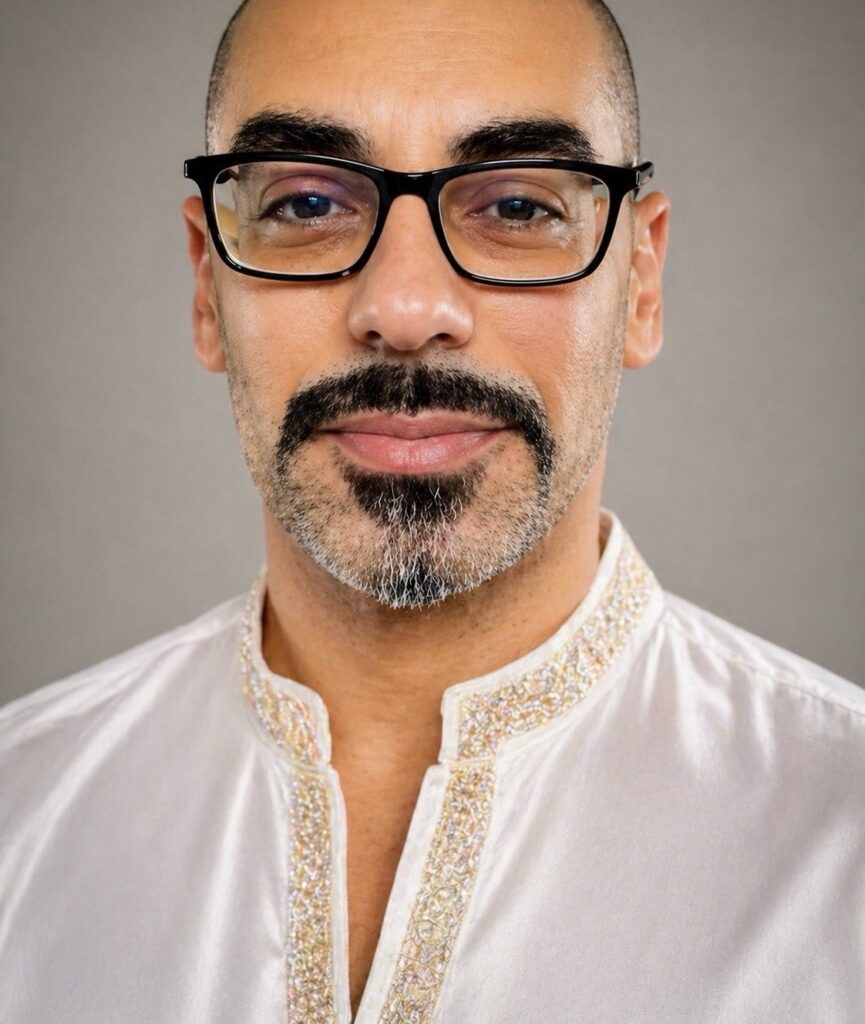
About Yahia Lababidi
Yahia Lababidi is an Arab American poet and essayist of Palestinian descent. If You Cannot Say GENOCIDE will be his sixteenth book. Other recent books include Palestine Wail, written in the first months of Israel’s assault on Gaza; What Remains to Be Said; and forthcoming Wherever You Are: Essays from East to West (Ayin Press, 2027). His work appears in Liberties, Salmagundi, The Threepenny Review, The New Statesman, Sojourners, World Literature Today, The New Arab, and DAWN. He has reached audiences through NPR, PBS, ABC Radio National, and On Being, and his work has been translated into more than a dozen languages.
“The book emphasizes that Palestinian freedom and Jewish safety are interconnected and essential. While it expresses genuine anger, it also firmly rejects hatred. For Lababidi, showing solidarity isn’t just a political stance; it’s a spiritual practice, reminding us that every stranger might be one of the quiet righteous keeping the world going.”
—Hossam el-Hamalawy, The New Arab. Read the full review here.
“When the necessary cataloguing of statistical evidence of genocide becomes numbing, Yahia Lababidi’s skill in sculpting our understanding steps in.”
— Daniel Levy, President, US/Middle East Project
“At the 1963 March on Washington, Joachim Prinz, reflecting on his experience as a rabbi in Nazi Germany, declared that ‘The most urgent, the most disgraceful, the most shameful and the most tragic problem is silence.’ In hauntingly beautiful poetry and prose, Yahia Lababidi offers a similar message. Centuries and continents separate that genocide from this one, but humanity’s moral challenge remains the same. In this new age of evil, If You Cannot Say GENOCIDE calls us to meet it.”
— Peter Beinart, author of Being Jewish After the Destruction of Gaza
If You Cannot Say GENOCIDE in the Media
Palestinian cultural magazine Romman, reviews Yahia Lababidi’s If You Cannot Say Genocide.
The review frames the book as an act of testimony from an Arab-American perspective, exploring how personal narrative, literary reflection, and cultural critique bear on the ethics of witnessing when the language of violence itself is contested. It notes the book’s roots in exile and moral reckoning, and situates it within a Palestinian cultural context, with the piece currently ranking among the magazine’s most-read.
To read the full review, click HERE.

The New Arab published the first advance review of If You Cannot Say GENOCIDE.
The review situates the work not as history, legal argument, or reportage, but as an examination of the moral injury of watching from a distance while language is shaped to conceal what images reveal. Written between 2023 and 2026, the essays trace Lababidi’s conviction that euphemism and passive voice do not merely misrepresent violence, but create the conditions for it to continue unchallenged.
To read the full review, click HERE.

On her Substack Writing Without Paper, Maureen Doallas reviews Yahia Lababidi’s forthcoming If You Cannot Say GENOCIDE. Doallas considers what’s at stake in naming atrocity plainly, and how Lababidi’s insistence on the word genocide coexists, without contradiction, with his refusal of hatred.
To read the full review, click HERE.
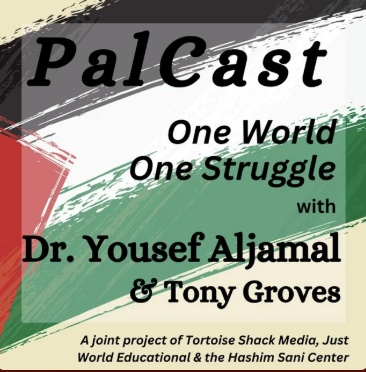
PalCast Episode Features Yahia Lababidi on If You Cannot Say GENOCIDE
The discussion covers poetry as a tool for moral witness, shifting American attitudes toward Palestine, and Lababidi’s experience with censorship in publishing.
Listen to the full episode on Apple Podcasts and Spotify.
Bazaar Kuwait Reviews Yahia Lababidi’s If You Cannot Say GENOCIDE in “The Weight of Words”
The piece explores how Lababidi’s 47 essays confront the language used, and avoided, when describing Gaza, and how his identity as an Arab American writer shaped his sense of moral responsibility from afar.
Read the full review HERE.